
Thirty-six years after École Polytechnique, women still face deadly violence
Thirty-six years after École Polytechnique, women still face deadly violence
On Dec. 6, 1989 – 36 years ago now – 14 young women were murdered at École Polytechnique in Montréal in an act of gender-based violence.
It led Canada’s Parliament to designate Dec. 6 as The National Day of Remembrance and Action on Violence Against Women.
But the issue certainly hasn’t disappeared in the intervening years. According to the Ontario Association of Interval and Transition Houses’ annual femicide list, there have been 43 femicides in Ontario over the past year, three of them here in Sudbury.
That includes a woman identified in the report as Robin Kanasawe, who was killed in a shooting on Clemow Avenue June 13, an unidentified woman visiting from Nigeria killed July 2 (the accused is her son-in-law) and another unidentified woman who was shot at a Paris Street residence Aug. 29.
Femicide, says the report, is broadly defined as gender-related killing of women and girls by men.
YWCA Sudbury executive director Marlene Gorman said domestic violence is an epidemic, and it’s increasing.
The local Genevra House women’s shelter is experiencing increasing calls from those looking to leave an abusive relationship, said Gorman, and similarly, police are experiencing an uptick in domestic violence calls.
With a lack of affordable housing, women’s shelters are full.
“Women are staying longer because they don’t have an affordable place to move into, right?” she said, adding that it puts them in an unsafe position.
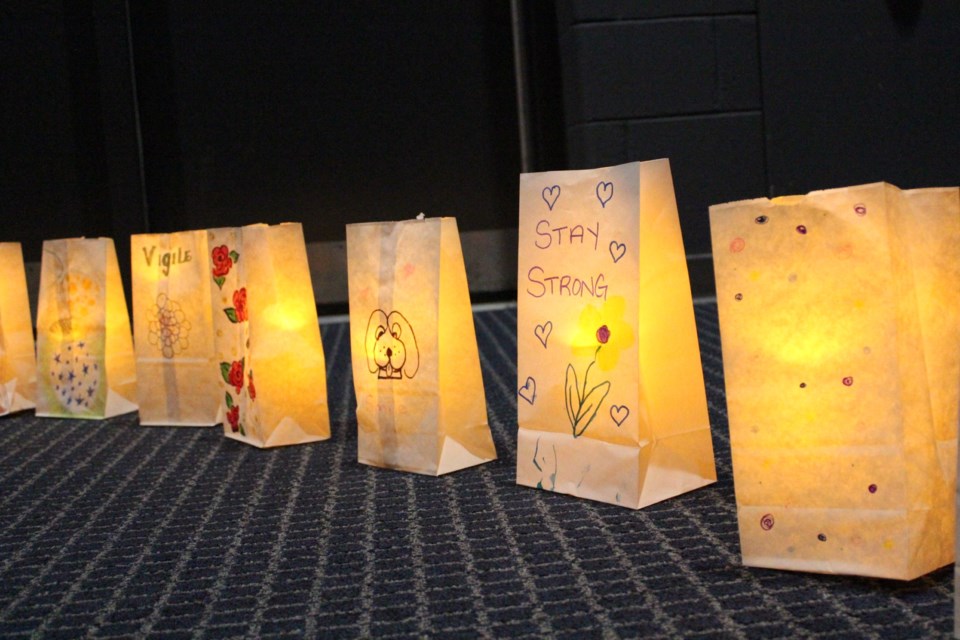
Gorman spoke to Sudbury.com about the issue at an event held Dec. 5 to mark The National Day of Remembrance and Action on Violence Against Women.
Co-hosted by YWCA Sudbury, Centre Victoria pour femmes and the Sudbury Women’s Centre, it featured a screening of a short National Film Board documentary called “Afterwards” at Sudbury Indie Cinema.
The documentary features women who have experienced domestic violence living in a shelter, and their struggles as they try to move on with their lives.
If you’d like to view the documentary, it is available to stream for free through the National Film Board’s website.
Several of Greater Sudbury’s elected officials were on hand at the event, including Sudbury MP Viviane Lapointe, Sudbury MPP Jamie West and Nickel Belt MPP France Gélinas.
The event not only recalls the date of the École Polytechnique massacre, but serves to “keep the memory of these women alive,” said Chantal Makela, interim executive director of the Sudbury Women’s Centre.
The women’s names were Geneviève Bergeron, Hélène Colgan, Nathalie Croteau, Barbara Daigneault, Anne-Marie Edward, Maud Haviernick, Maryse Laganière, Maryse Leclair, Anne-Marie Lemay, Sonia Pelletier, Michèle Richard, Annie St-Arneault, Annie Turcotte and Barbara Klucznik-Widajewicz.
Their “only offense was their ambition and their goals and their gender,” and this “senseless act of violence robbed the world of 14 bright futures,” said Makela.
With femicides only continuing to increase in Canada since 1989, “we reflect on the work that we do and the strides that must still be made for meaningful change,” she said.
“Today serves as an urgent call to action. While progress continues to be made by so many incredible organizations and individuals, including the people in this room, there is still more to be done.
“The violence that claimed the lives of the 14 women over 30 years ago continues to be part of a broader systemic issue that still impacts the lives of countless women across our country and the world.
“It reminds us that true change requires every one of us to actively challenge the foundation of gender inequality and gender-based violence.
“As we proceed with today’s event, let our shared commitment be one of vigilance, respect and enduring action, ensuring that the legacy of these 14 women leads us forward to a safer and more equitable future for all.”